Dark Web Defense: How to Stop Personal Data Leakage
 Sharon
  2026.08.25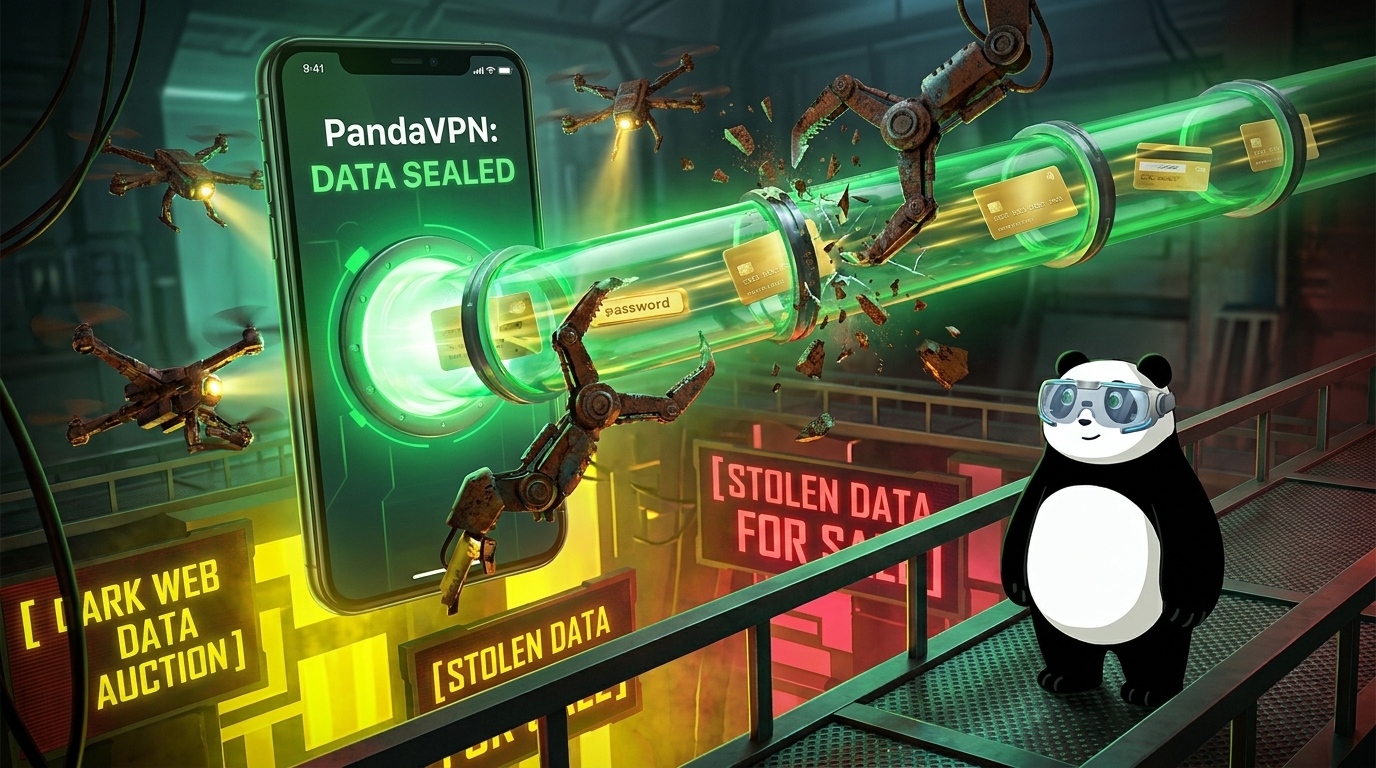
Every day on dark web forums, thousands of “data dumps” change hands. Your identity numbers, phone numbers, and credentials are brandished as cheap commodities.
Many believe personal data security is entirely out of their hands—blaming large corporate data breaches. While enterprise-level server hacks (“under-the-iceberg” passive leaks) account for roughly 60% of data exposure, the remaining 40% consists of active, personal leaks. These occur when hackers intercept your digital footprints via network snooping, session hijacking, or phishing.
While no VPN can prevent a third-party corporate server from being breached, you can completely block active leak channels. By combining strict data hygiene with robust encryption, you can sever the pipeline feeding your information to the dark web.

1. Seal Your Data Pipe with ECC Encryption
-
The Vulnerability: When browsing on untrusted public Wi-Fi (airports, hotels, cafés), attackers can easily intercept your internet traffic or steal session cookies. This allows them to bypass passwords and hijacked accounts without ever needing your credentials.
-
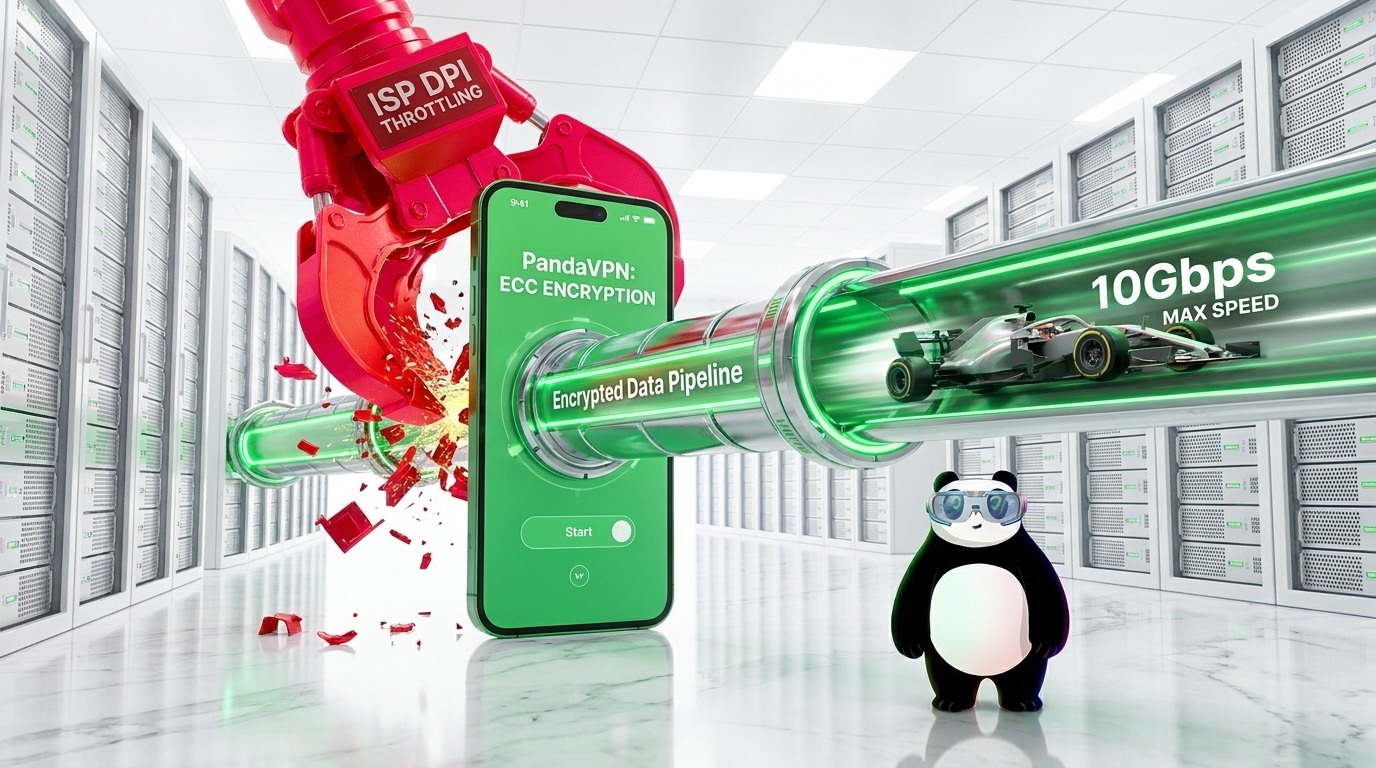
The Defense: Before connecting to any public network, activate PandaVPN. Built with the highest level of secure ECC (Elliptic Curve Cryptography) encryption technology, PandaVPN shields your active sessions inside an unbreakable cryptographic tunnel. Even if a bad actor sniffs your data packets on public Wi-Fi, they are left with entirely useless code, rendering session hijacking impossible.
2. Bypass Network Throttling & Malicious Tracking
-
The Vulnerability: Malicious networks or ISPs often log your browsing habits, inject tracking cookies, or throttle connection speeds to force users onto less secure configurations where credentials can be harvested.
-
The Defense: PandaVPN routes your traffic through an expansive global infrastructure of over 6,000 servers across 100 countries. Operating under a strict zero-logs policy, your online activities are never recorded or stored. Furthermore, implementation of patented acceleration technology and ultra-fast IPLC (International Private Leased Circuit) servers ensures low-latency, high-bandwidth security. This bypasses ISP snooping and local censorship smoothly without sacrificing connection performance.
3. Practice Digital Decoupling (Mitigating Credential Stuffing)
-
The Vulnerability: Hackers frequently use automated scripts for “credential stuffing”—taking an email and password leaked from a small, compromised website and trying those exact combinations across mainstream financial, social, and cloud platforms.
-
The Defense:
-
Zero Password Reuse: Utilize a dedicated password manager to generate distinct, complex strings for every unique service.
-
Enforce Multi-Factor Authentication (MFA): Bind your critical accounts to time-based one-time password (TOTP) authenticators. This ensures that even if a legacy password is exposed in a corporate database leak, unauthorized actors cannot access your accounts without physical possession of your secondary device.
-
Breach Recovery: What to Do If Your Data Is Already Exposed
-
Audit via Public Repositories: Periodically check data breach aggregation sites like Have I Been Pwned to verify if your primary email addresses have been compromised in past third-party corporate leaks.
-
Immediate Credential Isolation: If an audit reveals exposure, immediately change the compromised password across all platforms where variations of it may have been deployed.
-
Guard Against Targeted Phishing: Dark web data dumps often combine names, phone numbers, and addresses. Be highly vigilant against sophisticated spear-phishing calls or messages posing as courier services, bank support, or government officials. Always verify through official, independent channels.
Securing personal data requires a continuous commitment to routine data hygiene. While you cannot dictate the cybersecurity posture of multinational enterprises, you can ensure your daily digital footprint remains completely invisible.
By employing robust password management alongside the elite ECC encryption protocols and high-speed IPLC networks of PandaVPN, you can successfully isolate your personal traffic from dark web threat actors.

Related Posts
Featured Posts